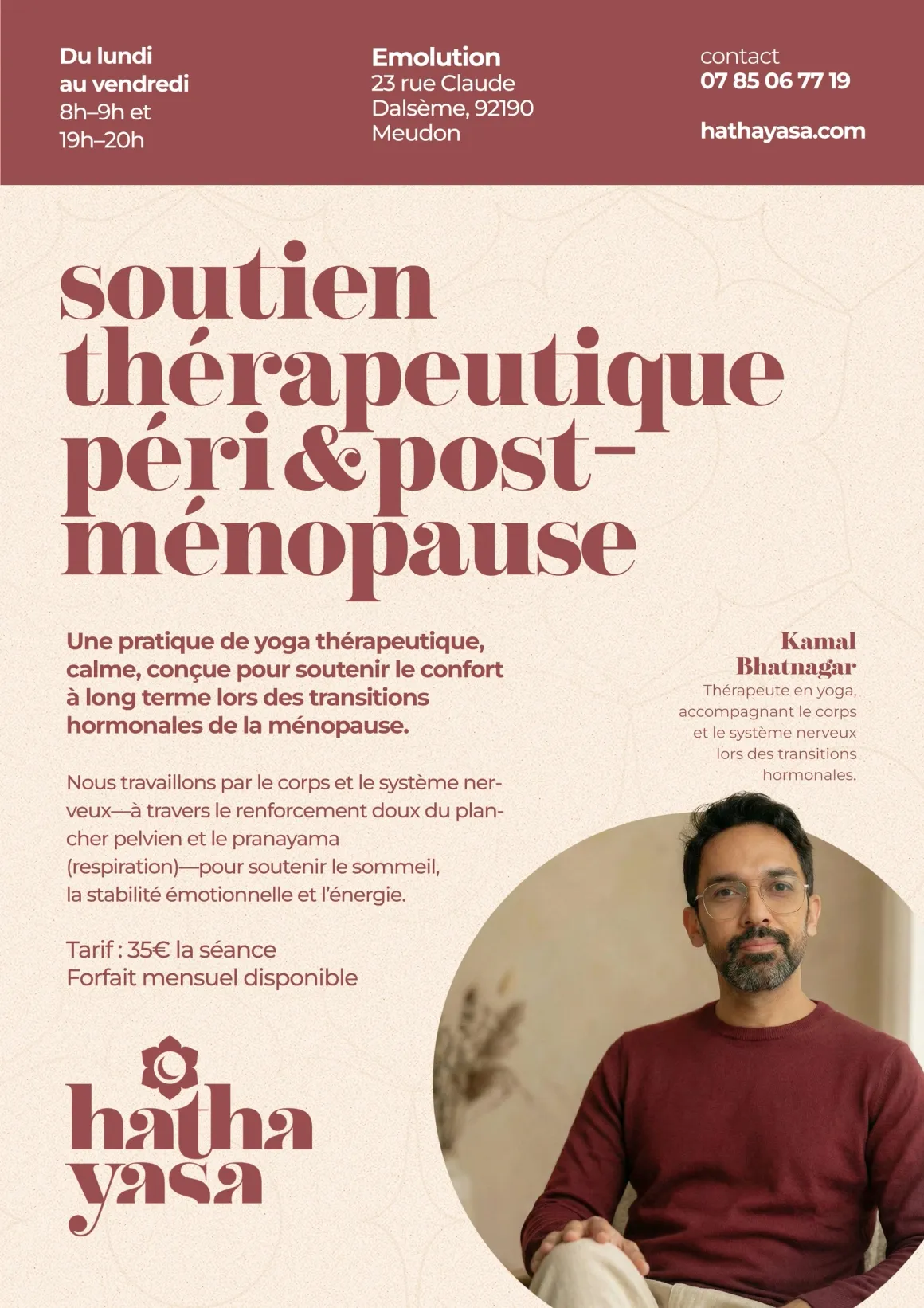
Menopause gets talked about as one event. In practice, it's a years-long hormonal transition that touches sleep, mood, joints, temperature regulation, and the nervous system all at once — which is exactly why a single fix rarely works, and why yoga therapy has a real, specific role to play here rather than a vague wellness one.
I want to be direct about both sides of this: what the practice genuinely helps with, and where it isn't the right tool on its own.
What menopause actually does to the nervous system
Estrogen has a regulating effect on the nervous system and on how the body handles stress and temperature. As it fluctuates and declines, many people experience what feels like a lower tolerance for stress, disrupted sleep, hot flushes, and a kind of internal restlessness that wasn't there before. This isn't "in your head" — it's a physiological shift, and it responds to physiological tools, not just willpower.
Where yoga therapy genuinely helps
Nervous system regulation
Structured pranayama (breathwork) and slow, therapeutic movement directly engage the parasympathetic nervous system — the part responsible for calming the body down. For hot flushes and night sweats specifically, several studies point to breath-based practices reducing frequency and intensity, likely by improving the body's stress response rather than the hormonal event itself.
Sleep
A consistent evening practice — long exhale breathing, gentle inversions, restorative holds — is one of the more reliable non-pharmaceutical tools for the sleep disruption that comes with this transition.
Pelvic floor and bone-supportive strength
Declining estrogen affects pelvic floor tissue and bone density. Targeted, therapeutic strengthening — not generic "core work" — supports both, and is something we build specifically into sessions for this stage of life.
Mood and a sense of agency
Many people describe menopause as something happening to them. A structured practice — something concrete they're doing, with results they can feel — tends to restore a sense of agency that matters as much as any physical benefit.
Why couples sessions come up here specifically
Menopause changes a household, not just one person in it. Some of the sessions taught at Emolution are built for couples for exactly this reason — not as therapy in the clinical sense, but as a shared practice that gives partners a way to be in it together rather than one person managing it alone.
What a realistic starting point looks like
This isn't about a single class fixing hot flushes. It's a structured, several-week commitment — usually beginning with a private session to map what you're actually experiencing, then a regular practice built around it. Most people notice sleep and stress-reactivity shift first, within a few weeks; the deeper physical changes take longer and stay only with consistency.
Navigating a difficult transition?
Tell me what you're experiencing and I'll suggest whether a private session, the couples format, or the ongoing group programme fits best.
Message on WhatsApp