About
Kamal
Bhatnagar.
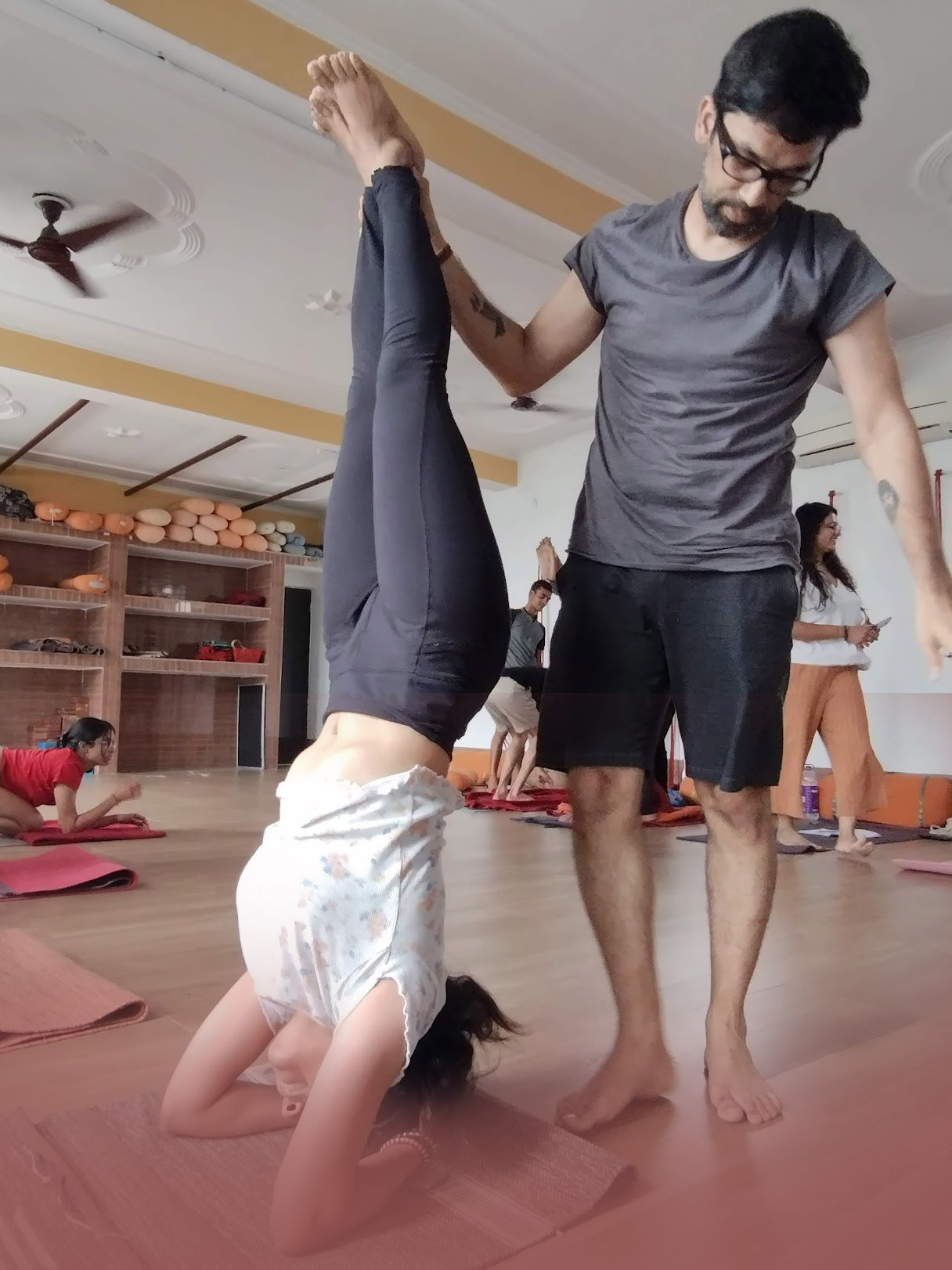
From the advertising world to the healing practice.
My name is Kamal Bhatnagar. I spent years as a Creative Director in the Indian and French advertising industry — a world defined by deadlines, performance, and image. A physical injury changed everything.
That injury became the beginning of a personal journey through pain management, emotional healing, and self-discovery. What I found in yoga was not a lifestyle trend. It was a precise, intelligent system for rebuilding the relationship between body and mind.
I have spent the last fifteen years studying that system rigorously: in India, France, and internationally, under some of the most respected teachers in the tradition.
I now teach from that position — with the precision of someone who used yoga to repair themselves, and the seriousness of someone who refuses to reduce it to aesthetics.
The approach
Pain management. Emotional healing. Personal growth.
These are not marketing phrases. They are the three pillars that shaped the Hathayasa method, taken directly from lived experience.
Pain management: yoga as a practical, adaptive tool for reducing chronic pain, improving mobility, and supporting recovery without relying on anything external.
Emotional healing: using breath, movement, and mindfulness to build mental strength, self-acceptance, and a renewed sense of purpose.
Personal growth: guided self-reflection and introspection as the real core of any lasting practice.
Teachers & lineage
Studied under the best.
- Swami Govindananda — Sivananda lineage, asanas and Vedic scripture
- Swami Tattvarupananda — Vedanta philosophy and meditation
- Dr. Vishwas Mandlik — Yoga Therapy and anatomy
- Ajay Tokas — Vinyasa sequencing and advanced practice
- Sharath Arora — Yoga therapy and pain management, Dharamshala
- Govind Rao — Kaivalyadhama method and classical yoga texts
The philosophy in one sentence
"Yoga is not a performance. It is a tool for people who need it to work."
That is the position Hathayasa is built from. Everything else — the certifications, the lineage, the methods — serves that single principle.